

CAD
 2026-09-17
 ️195 Views
 ️Vladimír Michl
2026-09-17
️195 Views
️Vladimír Michl
News and announcements from Autodesk University 2026
Report on technological innovations from AU2026 - AI is everywhere
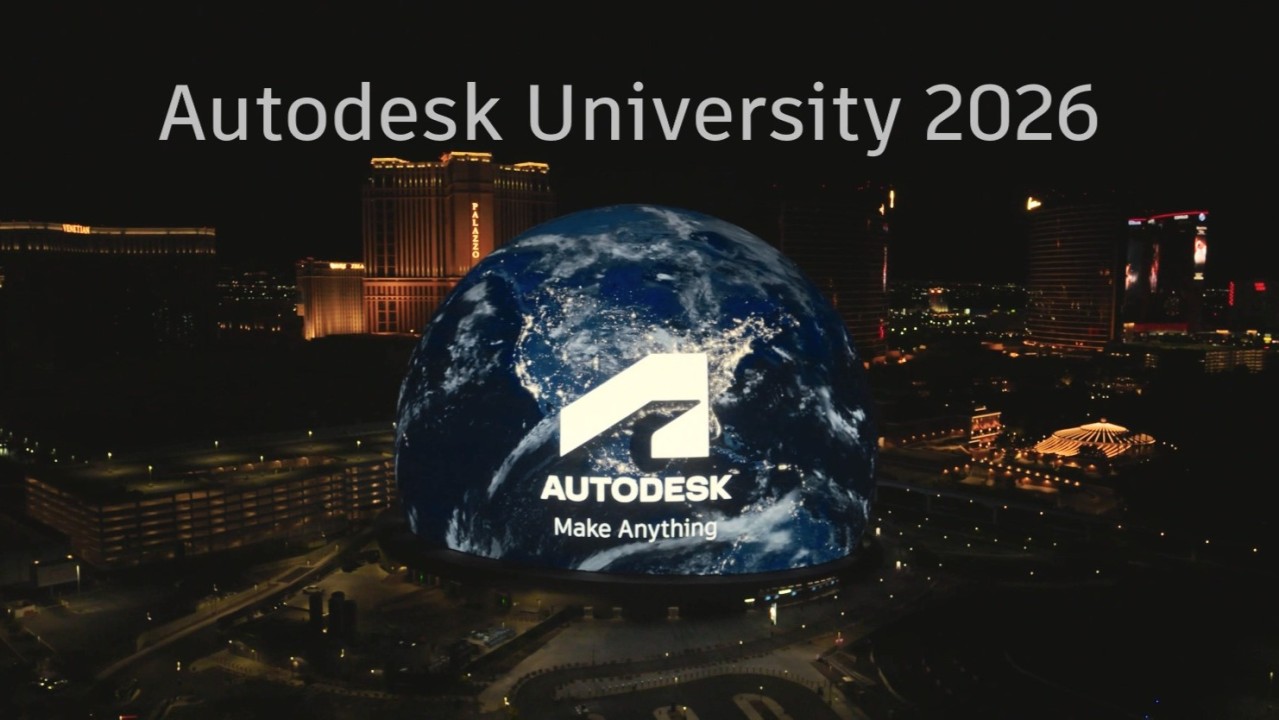
Autodesk University 2026: leveraging AI to boost capacity in digital design
This year’s Autodesk University 2026 conference, once again held in Las Vegas, isn’t focusing solely on AI itself, but primarily on its practical application for connecting data, processes, and decision-making across the entire project lifecycle. Autodesk is building this “project intelligence” on its Forma, Fusion, and Flow cloud platforms.
AI That Understands the Project
The most noticeable part of AI in Autodesk products is Autodesk Assistant. It is now shifting from a simple “AI window” within individual applications to a broader agent-based environment that spans products, teams, and projects. This allows AI to work with the entire project context, rather than just with the user’s prompt within a given product. As a result, it helps simplify and streamline full project-wide workflows.
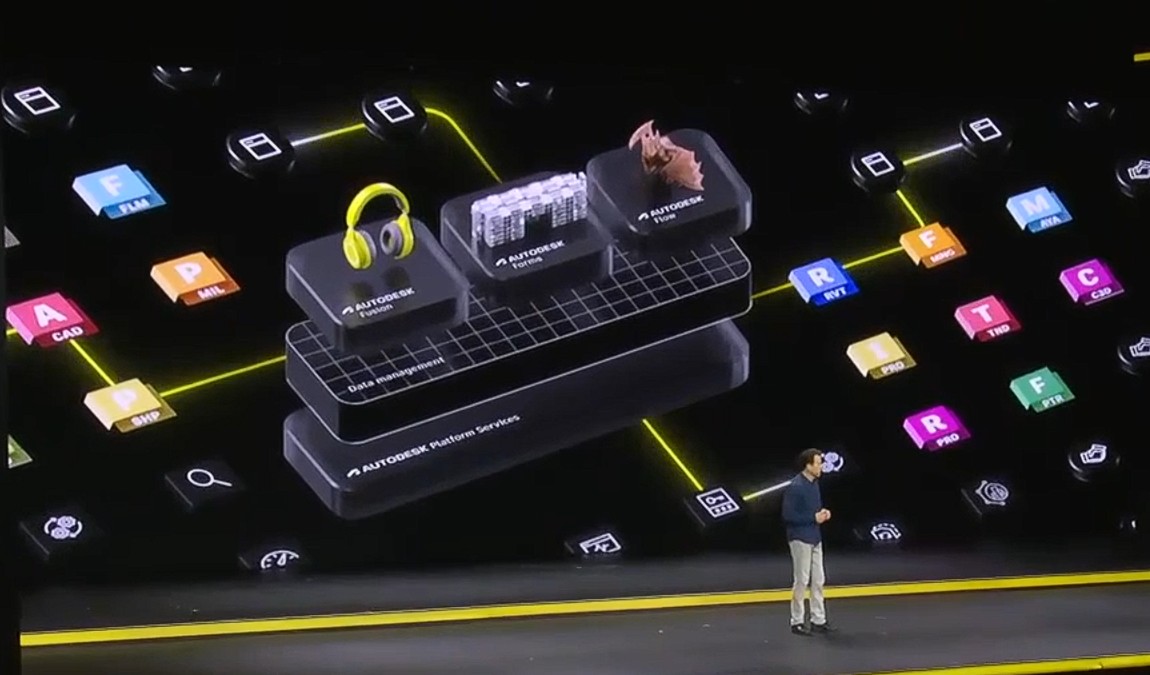
Key new features:
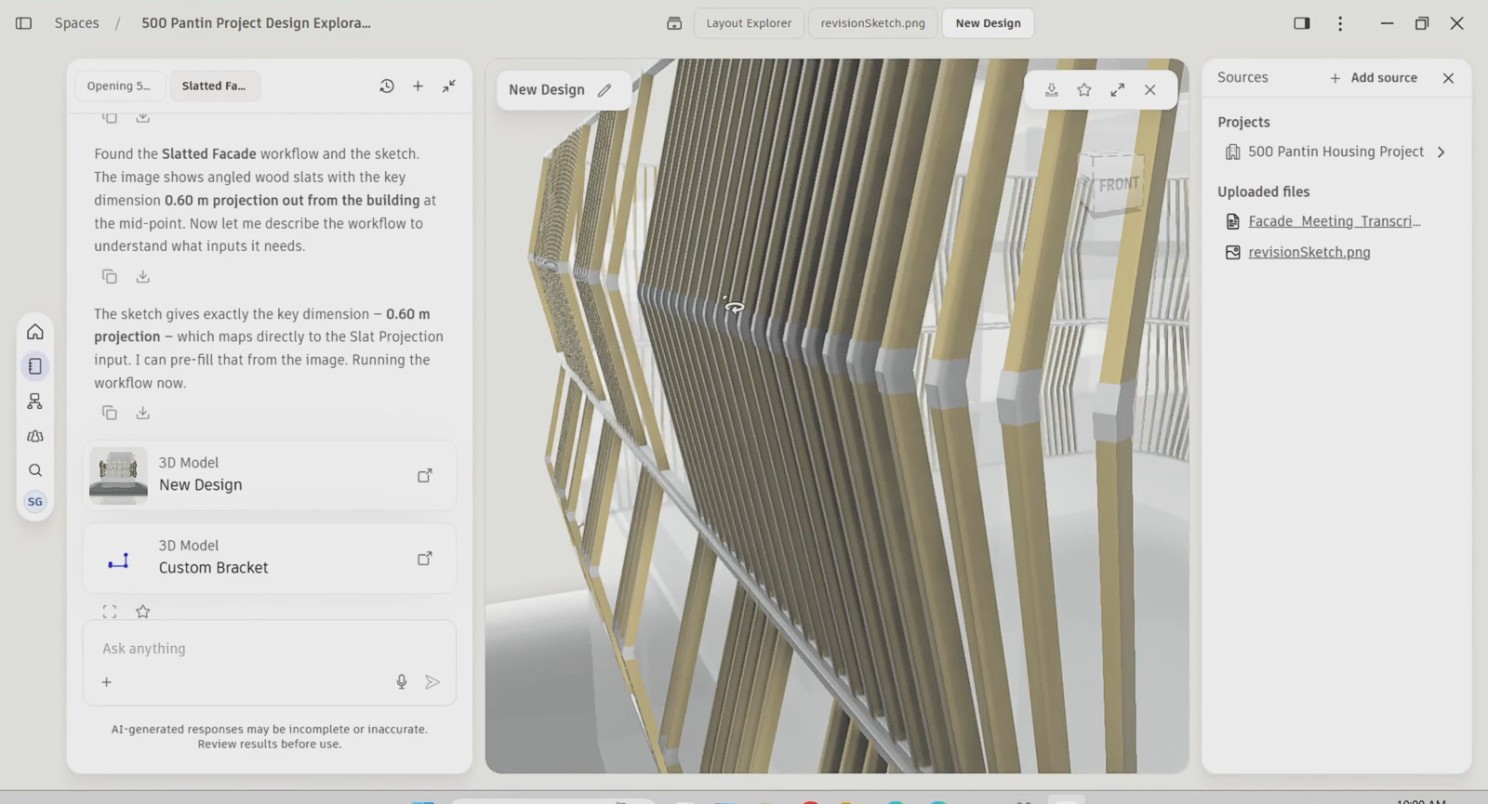
- The Assistant will be able to identify problems and their impacts and suggest relevant tools or entire workflows across the entire Autodesk solution ecosystem. It will also function as a standalone primary application (Spaces).
- It now introduces the ability to connect your own corporate AI agents and external services - with the Assistant Builder and AI Orchestrator.
- The Project Intelligence layer combines your project data, general industry context, and AI.
- Autodesk has traditionally been very transparent about how its AI uses your data—transparency cards are published for all his AI-powered tools. Now, AI Transparency Cards are also available directly in the Assistant, where they explain the models used, data sources, limitations, and security mechanisms of AI features. In addition to providing users with the necessary sense of security, this may also serve as a defense against the trendy “anti-growth” anti-AI wave of “we’re all going to perish”...
AEC: Forma Becomes the Center of the Entire Ecosystem
In the AECO industry, Autodesk continues to shift its focus toward the Autodesk Forma platform.
Most important announcements:
- Not only Revit, but now Civil 3D as well is becoming a so-called Forma Connected Client (with directly shared, unified geolocation and coordinate system), which enables direct interoperability between Forma, Revit, and Civil 3D.
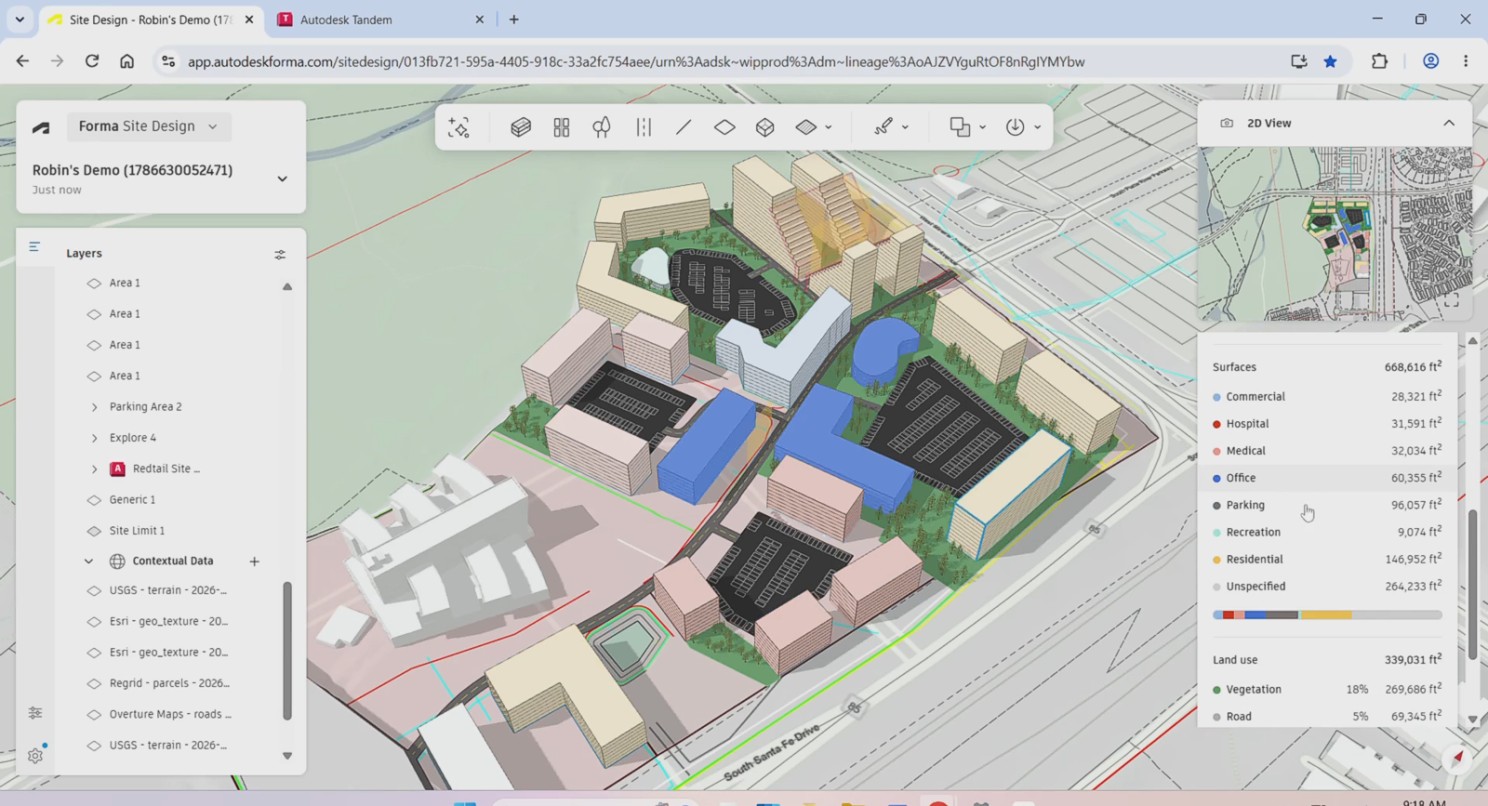
- In addition to Forma Site Design and Forma Building Design, a new tool called Forma Street Design was introduced for the conceptual design of roads and transportation corridors, integrated with Civil 3D.
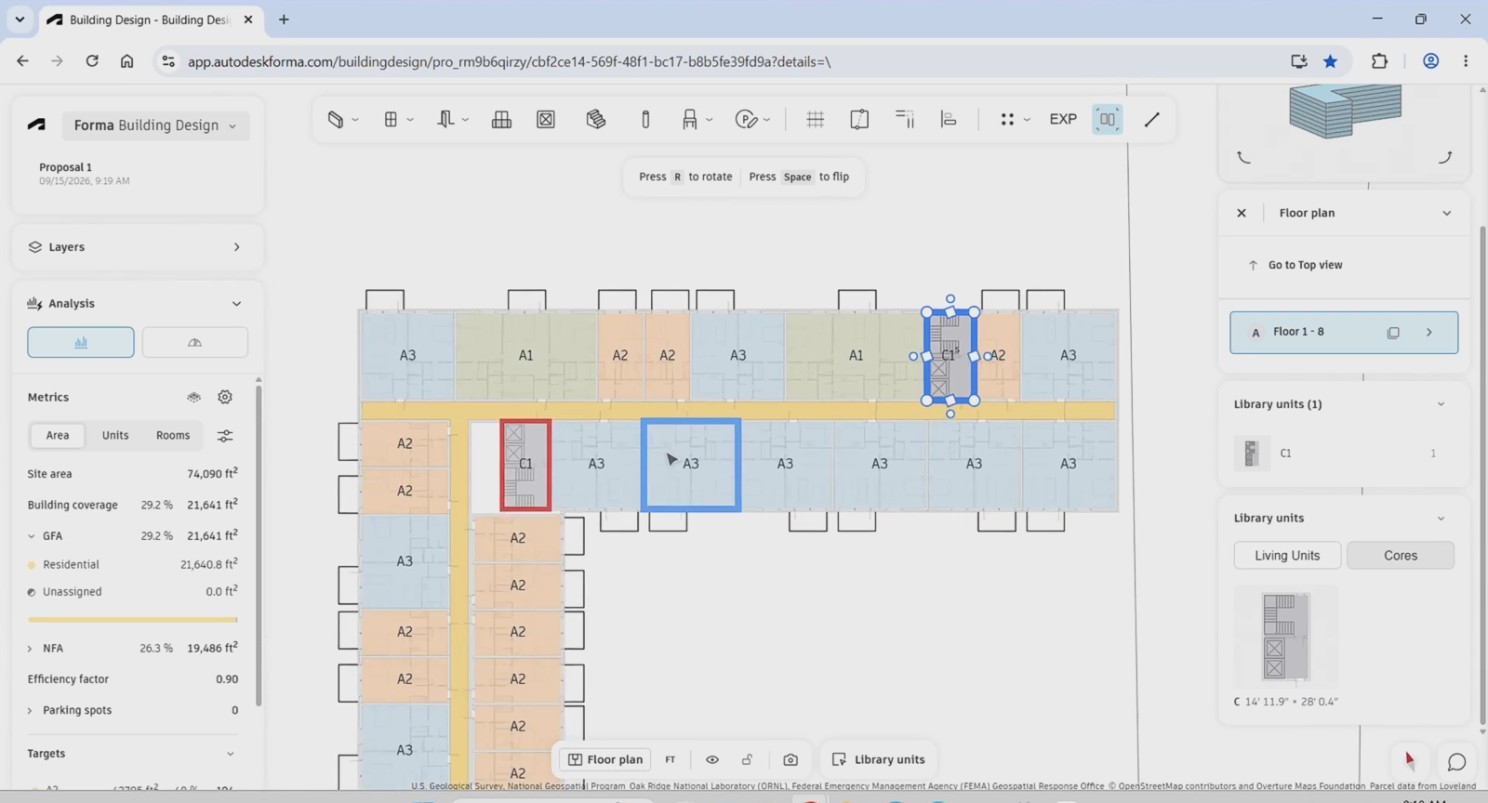
- Building Layout Explorer is a new feature in Forma Site Design (currently only in the US data center) - it allows you to design and optimize layout options for units (apartments, offices) on each floor plan.
- Revit will gain new AI features for automatic documentation, room completion, and annotation optimization.
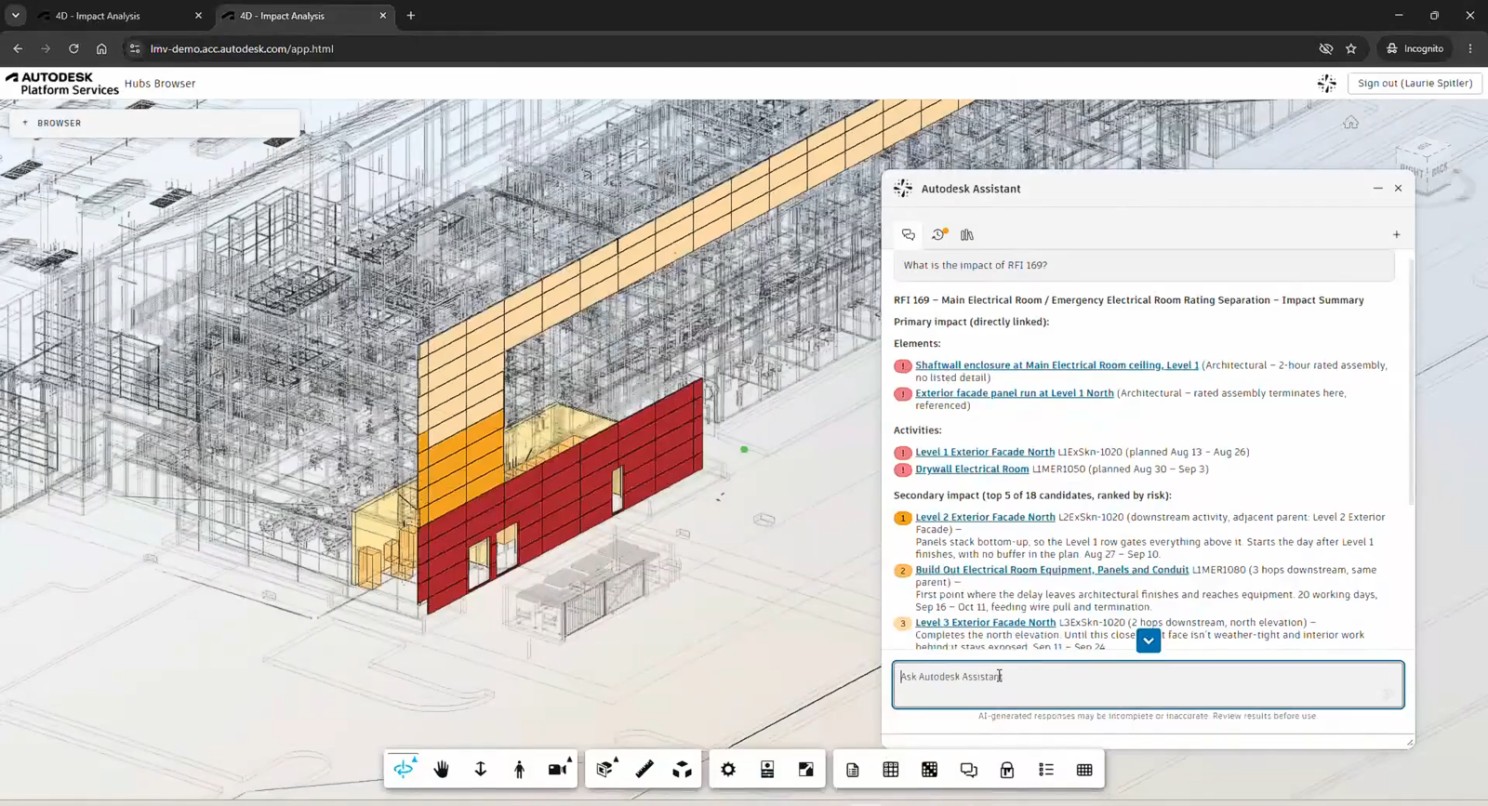
- AI tools available directly on the Forma cloud platform - with access to documents, workflows, and industry context - can assist with advanced queries such as “What is the impact of RFI No. 137 on the entire project?” (see image)
- In the construction sector, more AI agents are being introduced to review documentation, process bids and handoffs, and generate automated construction logs.
- Autodesk has openly confirmed that parts of the design workflows currently carried out in Revit will gradually be moved directly into the Forma application.
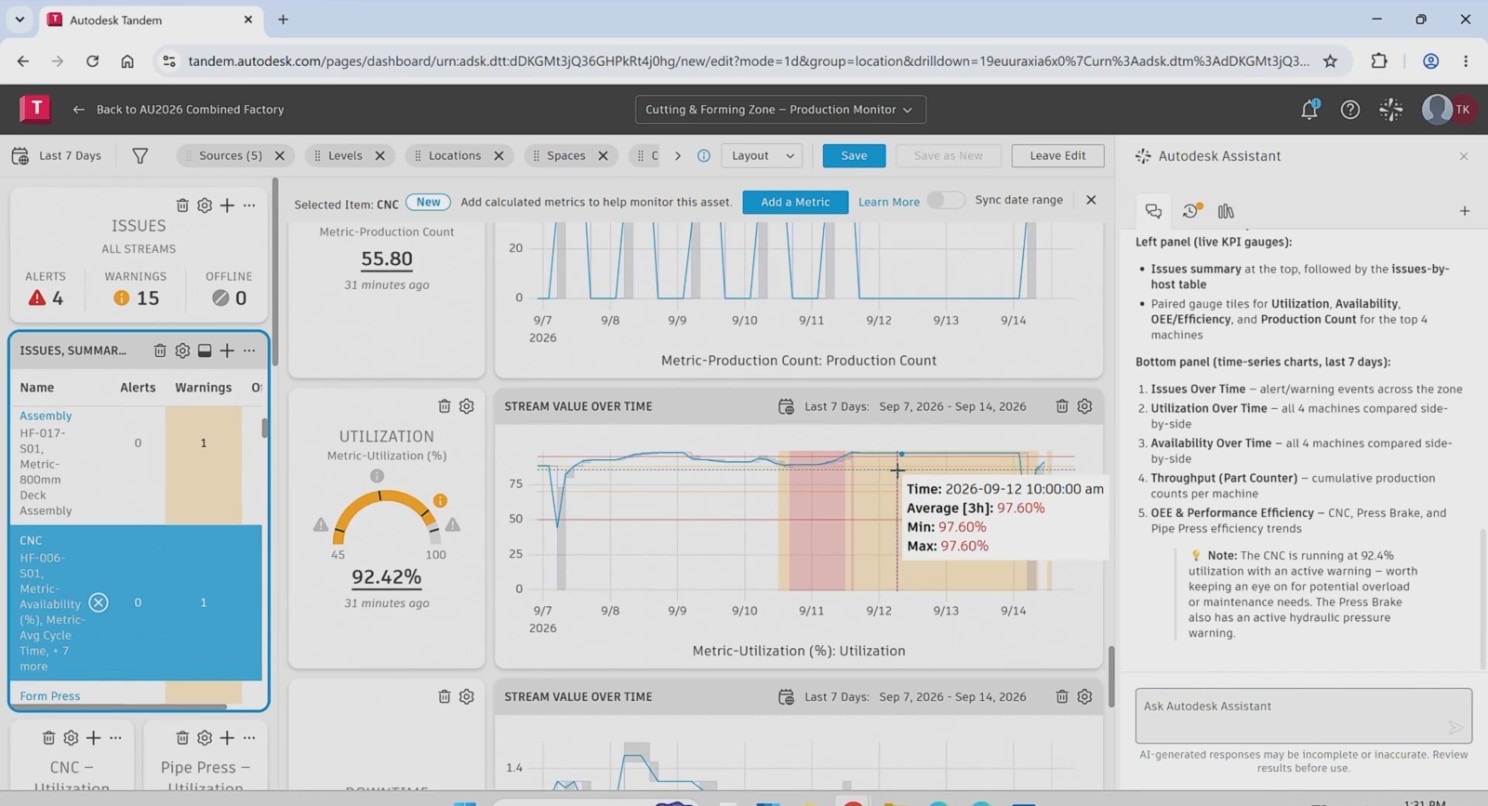
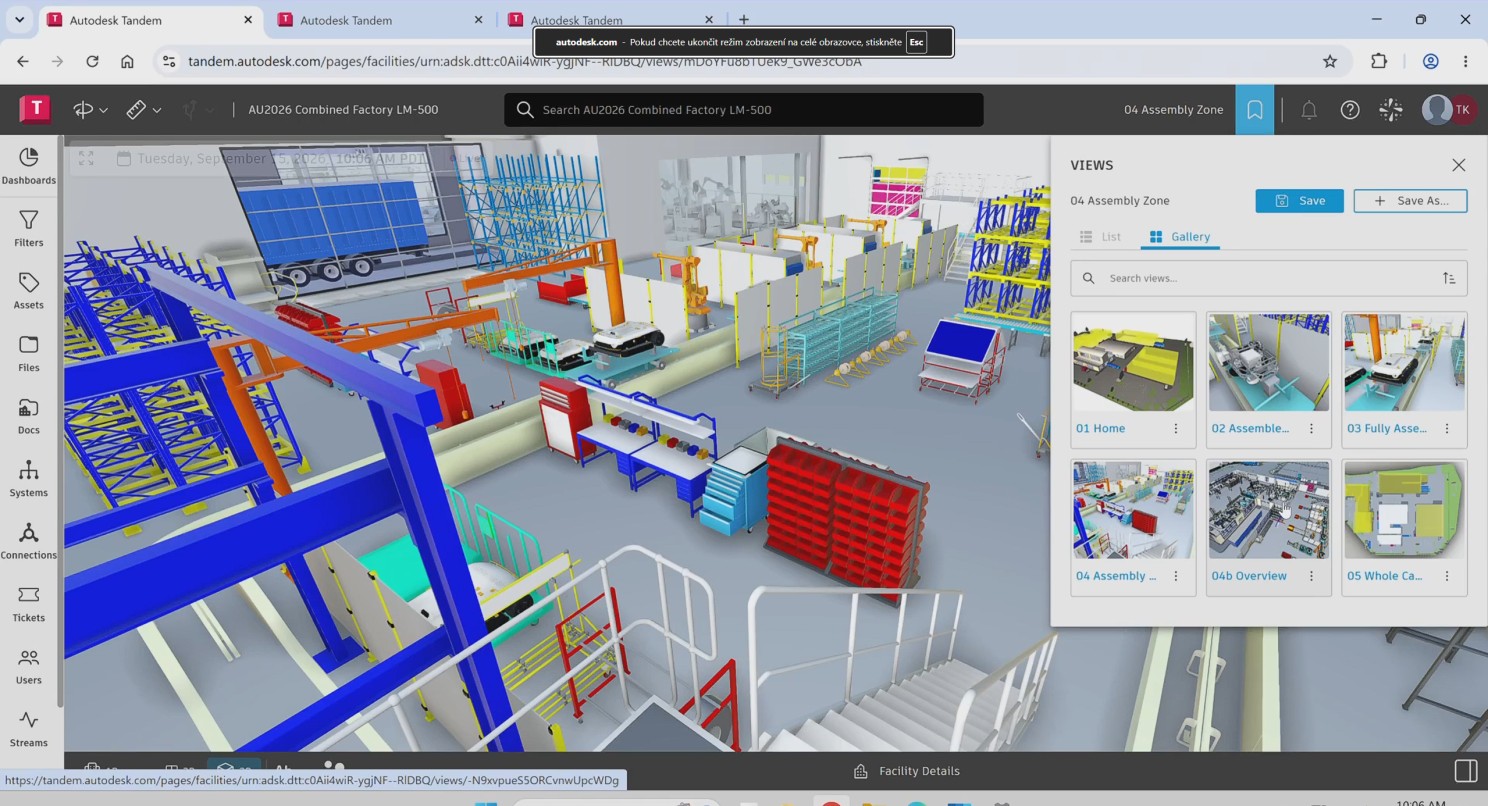
- The building operations and maintenance sector (AECO – O = operations) will see significant expansion thanks to the Tandem tools and a new acquisition - MaintainX.
Engineering and Manufacturing: More Automation on the Fusion Platform
In the design and manufacturing segment, Autodesk is significantly expanding AI capabilities in its Fusion, Inventor, and Vault applications.
The main new features include:
- AutoTimeline and AutoConstrain convert “dumb” imported geometry into editable Fusion parametric models (intelligent recognition of design features).
- AutoAssemble for automatically assembling parts into assemblies (recognizing and generating relationships, constraints and joints).
- AutoPart for quick conversion to a BREP model, with detailed and accurate 3D geometry, e.g., from a mesh.
- System Modeler for automating assemblies, sheet metal designs, CAM preparation, toolpath generation, and manufacturing processes.
- In the Fusion design and manufacturing workspace, it will be possible to work with purely local documents (without the cloud; needs an Extension).
- New agentic PLM processes that effectively link requirements, design data, and change management using AI. One example is the response to a reported disruption in production from subcontractors.
- Inventor will become the first Fusion Connected Client and will be more closely integrated with Fusion's cloud-based processes, including PLM.
- MaintainX tools expand the capabilities for managing and maintaining production facilities and equipment. Thanks to the integration of Autodesk Forma and Tandem, the digital twin is now at your fingertips - and with the integration of MaintainX tools, you can manage and plan your work orders and maintenance resources within this environment.
- An integration is being developed between the Tandem application and FlexSim, Autodesk's discrete-event simulation software - this will allow users to run simulations directly in Tandem.
Autodesk also presented its latest industry report - State of Design & Make 2027.
Multimedia
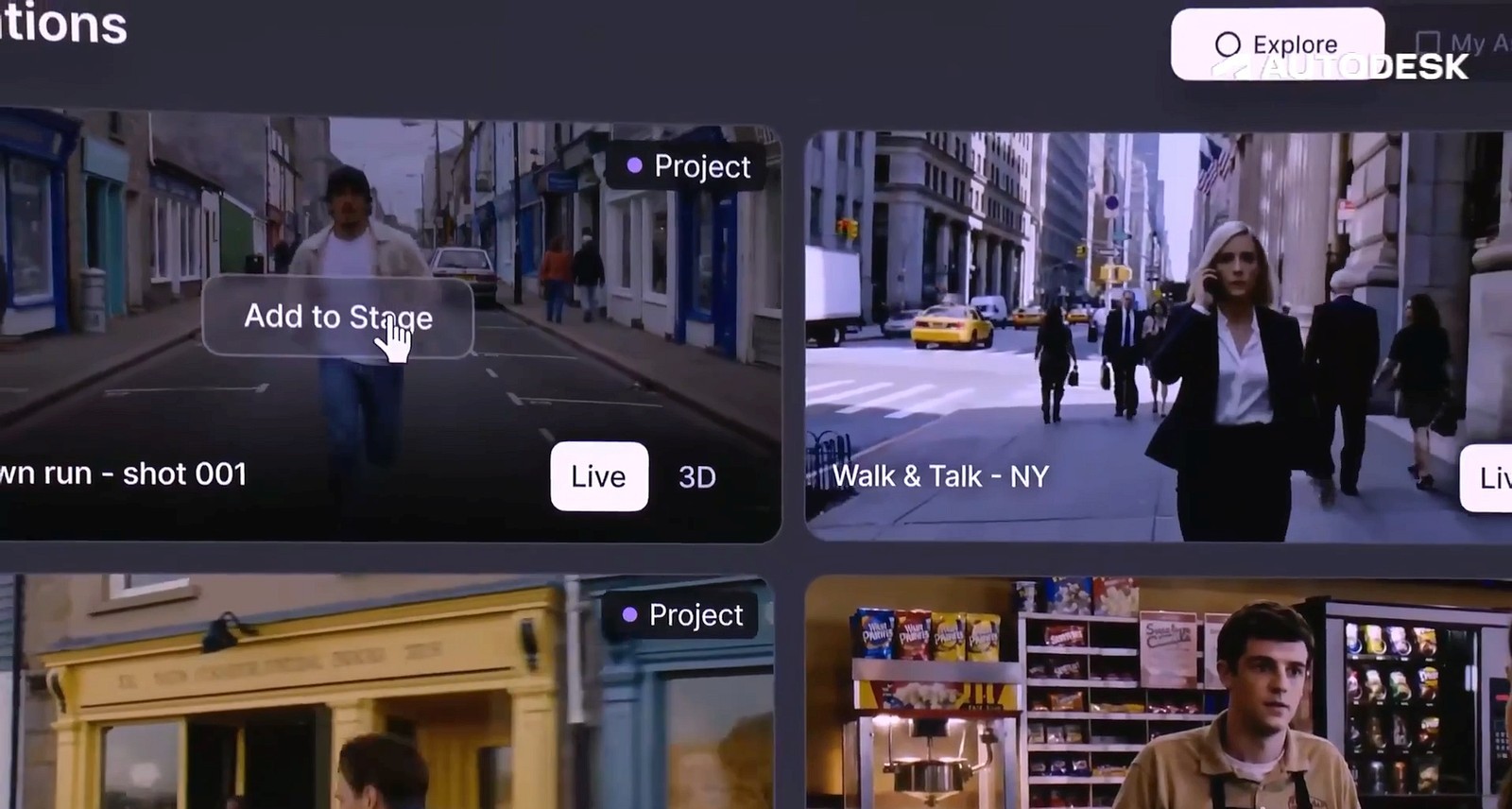
The process of democratizing the creation of multimedia projects, films, and commercials is underway—thanks to AI, even smaller creators can now use advanced features that were previously available only to large studios. An example is AI-generated character animation at Flow Studio (using the AI tool Wonder 3D) based on the movements of real actors. The collaboration with World Labs provides tools that make it easier to place scenes within the context of the surrounding world (Marble).
Summary
So far, the most important takeaway from the first and second days of AU 2026 is not AI itself, but the emergence of unified cloud platforms where AI operates across the entire project context. Autodesk is thus gradually integrating design, manufacturing, construction, and operations into a single data and process chain.
autodeskautodesk universityai
 discussion
Related:
